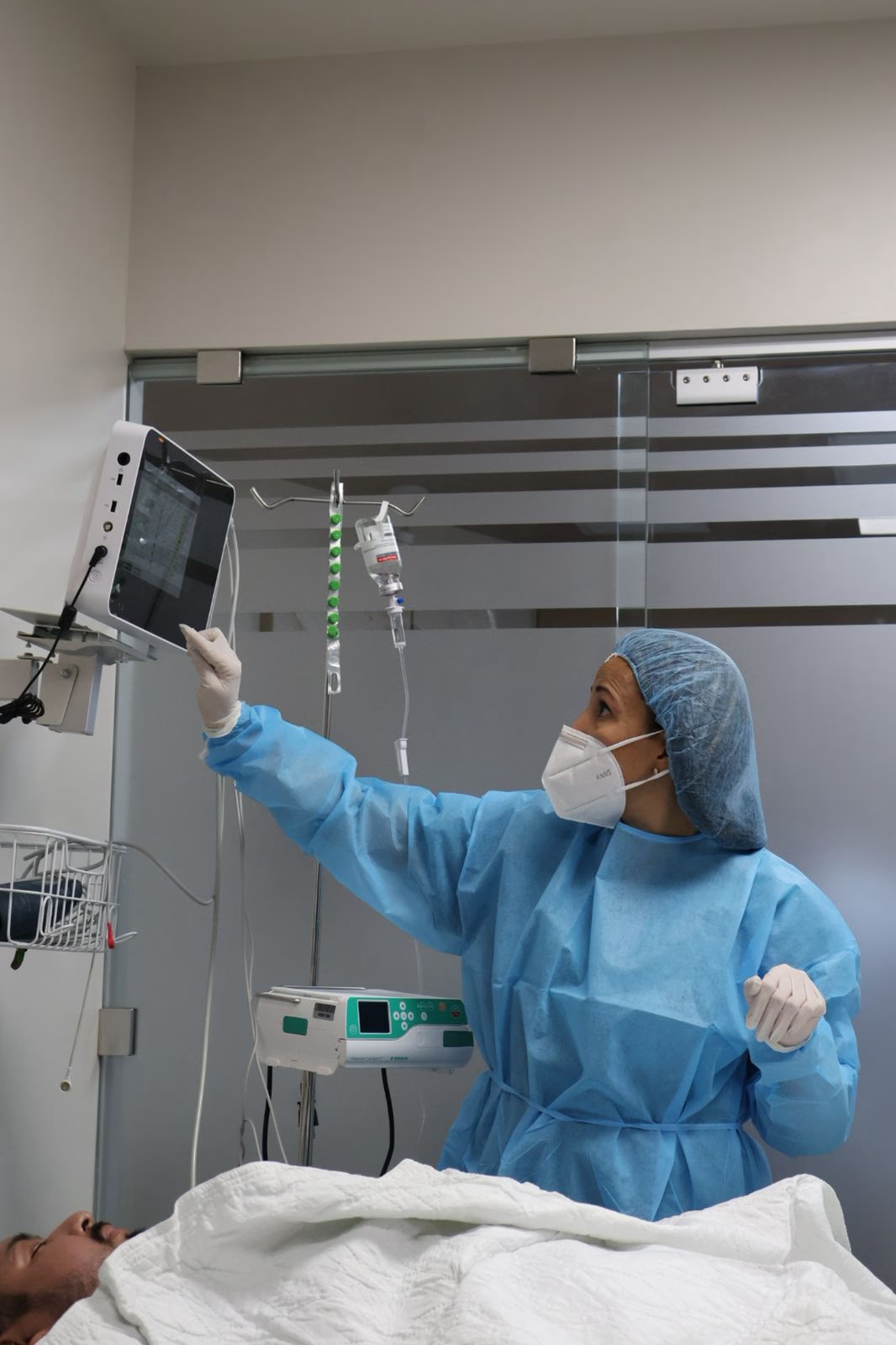

Bone Marrow Transplant Specialist in Guatemala City
Bone marrow transplant can be the cure you're looking for.
For many patients with leukemia, lymphoma, or aplastic anemia, bone marrow transplant is the difference between temporary remission and a definitive cure. The key is knowing when it's indicated, which type applies, and how to prepare the patient correctly.
When should you consult about bone marrow transplant?
Your doctor mentioned transplant as an option and you want to understand if it applies to your case
You have high-risk leukemia or are in remission and want to evaluate whether transplant is the next step
You are in relapse after treatment and transplant is being considered as rescue therapy
You have refractory lymphoma and were referred for autologous transplant evaluation
You were diagnosed with severe aplastic anemia and transplant is under consideration
You want a second opinion on whether transplant is the best option for your diagnosis
⚡ Consultations Monday to Saturday | In person and telehealth available
60-70%
5-year disease-free survival in leukemia with allogeneic transplant in first remission
80%+
response rate in relapsed Hodgkin lymphoma with autologous transplant
2
types of transplant available — autologous and allogeneic — depending on diagnosis and indication
Q475
transplant evaluation consultation with complete case review

Over 15 years evaluating candidates for Bone Marrow Transplant.
With a specific Master's Degree in Bone Marrow Transplant completed in Valencia, Spain, and a fellowship at Vall d'Hebron, I evaluate every case with up-to-date criteria: the correct indication, the appropriate type, and the preparation the procedure requires.
Autologous or allogeneic. They are not the same.
Bone marrow transplant — more precisely, hematopoietic stem cell transplant — involves replacing diseased bone marrow with healthy stem cells capable of regenerating the blood and immune system. There are two fundamental types with completely different indications, risks, and goals.
In autologous transplant, the stem cells come from the patient themselves — collected before conditioning and reinfused afterward. It is the standard in relapsed Hodgkin lymphoma and multiple myeloma in eligible patients. In allogeneic transplant, the cells come from a compatible donor — related or unrelated. It is the option with the greatest graft-versus-tumor effect and the potentially curative treatment in high-risk leukemias and severe aplastic anemia. Deciding which type applies to each patient requires analysis of the diagnosis, disease status, age, functional status, and donor availability.
“Transplant is not the last resort — in many cases it is the best resource available. The key is identifying the right patient, at the right time, with the right preparation.”—Dra. Fabiola Valvert
Conditions that may require bone marrow transplant.
Bone marrow transplant is indicated for a select group of hematologic diagnoses where conventional treatment is not enough to achieve a cure. Eligibility is evaluated case by case.
High-risk acute lymphoblastic leukemia
ALL with Philadelphia chromosome, T-cell ALL with slow response, ALL in second remission, or with high-risk cytogenetics. Allogeneic transplant in first remission can be the curative strategy in these cases.
High-risk acute myeloid leukemia
AML with adverse cytogenetics (del(17p), t(6;9), monosomy 7), AML in second remission, or refractory AML that achieves remission with rescue therapy. Allogeneic transplant offers the greatest graft-versus-leukemia effect.
Relapsed Hodgkin lymphoma
Autologous transplant is the standard of care in chemosensitive Hodgkin lymphoma in first or second relapse. In patients who fail autologous transplant, allogeneic transplant may be an option.
Relapsed aggressive Non-Hodgkin lymphoma
Chemosensitive relapsed diffuse large B-cell lymphoma, mantle cell lymphoma, and other aggressive lymphomas. Autologous transplant consolidates the response to rescue chemotherapy.
Multiple myeloma in eligible patients
Autologous transplant followed by lenalidomide maintenance is the standard of care in patients under 70 with multiple myeloma responding to induction.
Severe aplastic anemia
Allogeneic transplant from an HLA-compatible family donor is the first-line treatment in young patients with severe aplastic anemia. In the absence of a family donor, immunosuppression or an unrelated donor is used.
Severe sickle cell disease
Allogeneic bone marrow transplant is the only curative option for sickle cell disease. It is indicated in patients with severe manifestations — stroke, recurrent acute chest syndrome, or frequent vaso-occlusive crises — with a compatible family donor available.
High-risk myelodysplastic syndromes
In myelodysplastic syndromes with a high or very high IPSS-R score, allogeneic transplant is the only treatment with curative potential. Evaluation and the optimal timing for transplant require specialized analysis.
Do you identify with any of these?
A one-hour first consultation is enough to begin the workup and, if applicable, reach a clear diagnosis
Is transplant really the best option for your case?
Not every patient with leukemia or lymphoma needs a transplant. And not every patient who needs a transplant has been correctly evaluated to determine which type applies. The transplant evaluation consultation with Dr. Valvert answers those questions clearly.
Transplant eligibility evaluation
Determining whether transplant is indicated, which type applies (autologous or allogeneic), and whether the patient is at the optimal time for the procedure — with the disease in the right state and the patient able to tolerate it.
Second opinion before proceeding
If you've been recommended for a transplant and want an independent evaluation that confirms the indication, the correct type, and the proper preparation, Dr. Valvert reviews the complete case with up-to-date criteria.
Evaluation when the first transplant failed
In patients who relapsed after an autologous transplant, allogeneic transplant may be an option. Dr. Valvert evaluates available alternatives with up-to-date clinical judgment, without prematurely ruling out options.
“The decision to transplant is one of the most important in hematology. It requires the correct diagnosis, the correct timing, and the correct preparation. None of that can be improvised.”—Dra. Fabiola Valvert
How a candidate for bone marrow transplant is evaluated
Pre-transplant evaluation is a structured process that determines the indication, the type of transplant, the patient's eligibility, and donor availability when applicable. In the consultation with Dr. Valvert, each of these elements is reviewed.
Complete review of diagnosis and prior treatments
Complete hematologic history, cytogenetics, molecular studies, response to prior treatments, and current disease status. Transplant only makes sense at the right time and in the right context.
Evaluation of disease status
Transplant is generally performed in remission — when the disease is at its lowest point. Transplanting outside of remission significantly increases the risk of post-transplant relapse.
Evaluation of the patient's functional status
Cardiac, pulmonary, renal, and hepatic function. Nutritional status, comorbidities, and ability to tolerate conditioning. Biological age matters more than chronological age — some 65-year-old patients are better candidates than some 50-year-olds.
HLA typing and donor search
For allogeneic transplant, HLA typing is performed on the patient and first-degree relatives. If there is no compatible family donor, a search is initiated in international unrelated donor registries.
Selection of the conditioning regimen
Conditioning — high-dose chemotherapy with or without irradiation — destroys the diseased marrow and makes room for the donor's cells. Intensity is adjusted based on age, diagnosis, and functional status.
Infusion and post-transplant follow-up
Stem cell infusion, engraftment monitoring, management of complications (infections, graft-versus-host disease in allogeneic transplant), and long-term follow-up with remission evaluation.
Why consult Dr. Valvert for bone marrow transplant?

Dra. Fabiola Valvert
Hematologist specialized in Bone Marrow Transplant. International training at Vall d'Hebron, private practice in Guatemala City.
Master's Degree in Bone Marrow Transplant — Valencia, Spain
Dr. Valvert completed a specific Master's Degree in Bone Marrow Transplant at the Hospital de Valencia, Spain, complemented with bone marrow transplant rotations at Hospital Universitario Vall d'Hebron — one of the most active hematopoietic transplant centers in Europe.
Rigorous evaluation of indication and eligibility
Not every patient who comes requesting a transplant needs one — and not every patient who needs one has been properly prepared. Dr. Valvert evaluates the indication with up-to-date criteria and without bias in either direction.
Experience in both autologous and allogeneic transplant
Management of both types of transplant, including complex cases such as transplant in second relapse, transplant with an unrelated donor, and transplant in patients with comorbidities requiring reduced-intensity conditioning.
Complete post-transplant follow-up in Guatemala
Post-transplant follow-up is as important as the procedure itself. Dr. Valvert accompanies her patients through long-term follow-up at Hospital Bonanova — without the need to travel abroad for routine monitoring.
Do you have a hematologic diagnosis? Book your consultation today.
First visit, second opinion, or transplant consultation — all options available.
Specialized Hematology in Guatemala
Dra. Fabiola Valvert - Hematóloga
15 Avenida 5-50 zona 15 Vista Hermosa 3, Edificio Spazio, Oficina 10-01Bonanova, a private hospital specializing in cancer care in Zona 15
Office Hours
Monday to Friday from 9:00 AM to 6:00 PM Saturday from 9:00 AM to 12:00 PM
Emergency Care
Dr. Valvert handles hematologic emergencies through Bonanova, a private hospital specializing in cancer care with full infrastructure for urgent situations.
Coverage Areas
All of Guatemala City
- • Unrestricted care throughout the capital, including Zona 9, 10, 13, 14, 15, and 16
- • Carretera a El Salvador and surrounding areas
Metropolitan Area
- • Mixco, Villa Nueva, Santa Catarina Pinula, San Cristóbal, and surrounding municipalities
All of Guatemala
- • Care for patients from all departments of the country
- • Telehealth available for patients outside the capital
International Coverage
- • El Salvador, Belize, Honduras, and Costa Rica
- • Telehealth available for international patients
Common questions, clear answers
Still have questions? Let’s talk directly on WhatsApp for personalized answers.