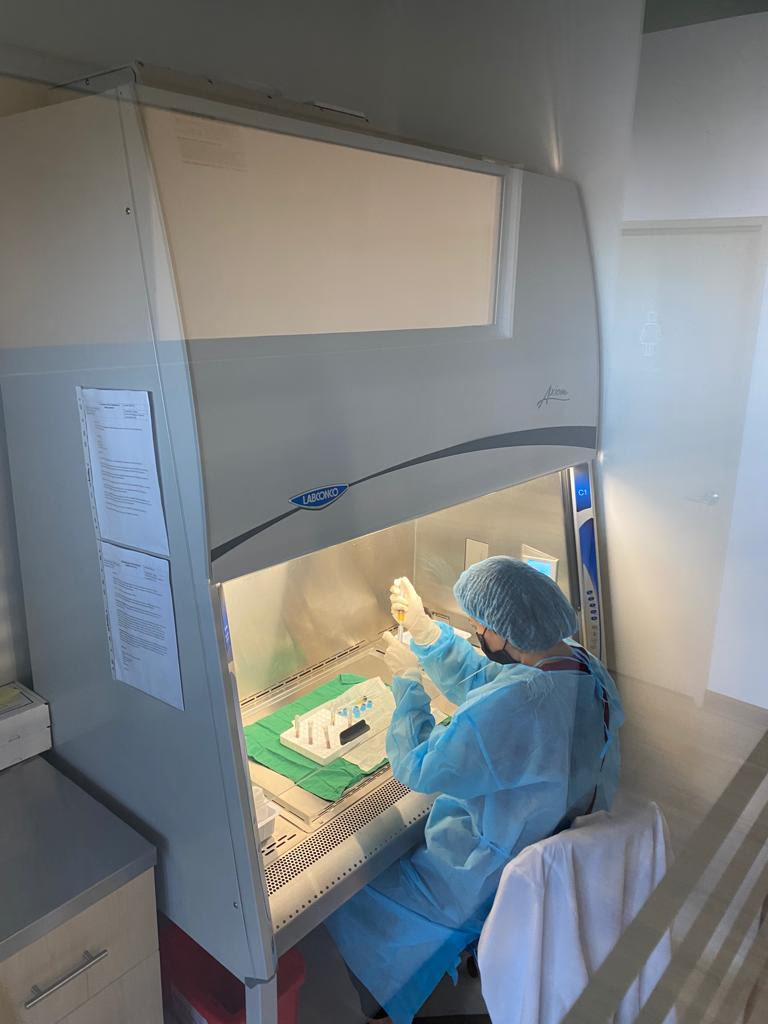

Hematologic Diagnosis Specialist in Guatemala City

Catch the problem before it becomes a problem. That changes everything.

Some hematologic diseases have prior states that are detectable — and treatable — before they become leukemia, lymphoma, or myeloma. Identifying them in time is the difference between watchful surveillance and an advanced cancer diagnosis.

When should you consult Dr. Valvert?

You were found to have monoclonal protein in blood or urine and don't know what it means

You have a family history of leukemia, lymphoma, or multiple myeloma

Your doctor found abnormalities in your blood count with no clear explanation

You were diagnosed with MGUS or smoldering myeloma and don't have specialized follow-up

You have persistent mild cytopenias with no identified cause

You were exposed to toxins or prior radiotherapy that increases hematologic risk

⚡ Consultations Monday to Saturday | In person and telehealth available

1%

annual risk of MGUS progressing to multiple myeloma — detectable with active surveillance

5-10 years

average time between the first abnormal finding and a leukemia diagnosis in some cases

90%+

remission rate in leukemia when treated at an early stage with the correct protocol

Q475

initial consultation with complete hematologic risk evaluation

Early Diagnosis and Hematologic Prevention Expert in Guatemala, Dr. Valvert

Active surveillance before the problem becomes urgent.

With over 10 international scientific publications and a fellowship in flow cytometry, I design follow-up plans for MGUS, myelodysplastic syndromes, and pre-malignant states — with clear criteria for when to observe and when to intervene.

10+international scientific publications
Vall d'Hebrontrained in Barcelona

Not every hematologic abnormality is cancer — but some can be.

There are hematologic conditions that sit between normal and malignant: so-called pre-malignant or precursor states. Some progress slowly over years. Others never progress. Knowing which category a patient falls into determines whether to observe, treat, or simply reassure.

Monoclonal gammopathy of uncertain significance (MGUS) can precede multiple myeloma by years. Low-risk myelodysplastic syndromes can progress to acute myeloid leukemia. Clonal hematopoiesis of indeterminate potential (CHIP) increases the risk of malignant hematologic and cardiovascular disease. None of these conditions always requires treatment — but all require specialized follow-up with clear criteria for when to act.

Detecting myeloma while it's still MGUS, or leukemia while it's still a low-risk myelodysplastic syndrome, completely changes the prognosis. Active surveillance is not passive observation: it's knowing exactly what to look for and when to intervene.
Dra. Fabiola Valvert
Warning Signs

Findings that deserve specialized hematologic evaluation.

Many pre-malignant states are detected as incidental findings on routine exams — without symptoms. Others present with subtle signs that go unnoticed. Recognizing them is the first step.

Book your appointment

Do you identify with any of these?

A one-hour first consultation is enough to begin the workup and, if applicable, reach a clear diagnosis

Active Surveillance

Follow-up that detects change before it becomes urgent.

Active surveillance in hematology is not passive waiting. It is a structured protocol with defined intervals, specific studies, and clear criteria for when to shift from observation to treatment. Dr. Valvert designs the follow-up plan according to each patient's individual risk.

01

MGUS and smoldering multiple myeloma

Low-risk MGUS requires monitoring every 6 to 12 months. High-risk MGUS and smoldering myeloma require more frequent monitoring — every 3 to 6 months — with defined progression criteria. Early detection of progression allows treatment to begin before organ damage occurs.

02

Low-risk myelodysplastic syndromes

Low-risk myelodysplastic syndromes (very low, low, and intermediate IPSS-R) can be followed with active surveillance for months or years. Progression to high risk or transformation to acute leukemia are the events that trigger treatment — and they must be detected in time.

03

Monoclonal B-cell lymphocytosis

Monoclonal B-cell lymphocytosis (MBL) is a precursor state of chronic lymphocytic leukemia. Most never progress, but a subgroup does. Follow-up with periodic immunophenotyping allows progression to be detected while it is still at an early stage.

MGUS doesn't need treatment. Myeloma does. The difference between the two is sometimes a protein that rises more than expected between two checkups. That's why active follow-up isn't optional — it's part of the treatment.
Dra. Fabiola Valvert
Evaluation Process

How hematologic risk is evaluated in consultation

Hematologic risk evaluation begins with a complete medical history and the available studies. In the first consultation with Dr. Valvert, risk is classified, a differential diagnosis is established, and a surveillance plan is designed.

Why consult Dr. Valvert for early diagnosis and prevention?

Doctor

Dra. Fabiola Valvert

Hematologist specialized in Early Diagnosis and Prevention. Cutting-edge international training and private practice in Guatemala City.

Fellowship in flow cytometry and cytogenetics

The tools that allow detection of abnormal clones and pre-malignant states require specialized training. Dr. Valvert has a specific fellowship in flow cytometry and cytogenetics — the key technologies in early hematologic diagnosis.

Active research in hematologic diagnosis

Dr. Valvert has published in Blood Advances on molecular diagnosis of lymphomas in low- and middle-income countries, and participates in multicenter studies on hematologic epidemiology in Latin America. Her patients benefit from that ongoing update.

Up-to-date diagnostic criteria

Diagnostic and progression criteria for MGUS, smoldering myeloma, and myelodysplastic syndromes are updated periodically. Dr. Valvert applies the most recent WHO and International Myeloma Working Group criteria — not outdated classifications.

Continuous follow-up without interruptions

Active surveillance only works when it's continuous. Dr. Valvert designs the follow-up plan and carries it out — with scheduled checkups, results interpreted in context, and timely action on any significant change.

Do you have a hematologic diagnosis? Book your consultation today.

First visit, second opinion, or transplant consultation — all options available.

Coverage and Location

Specialized Hematology in Guatemala

Dra. Fabiola Valvert - Hematóloga

15 Avenida 5-50 zona 15 Vista Hermosa 3, Edificio Spazio, Oficina 10-01

Bonanova, a private hospital specializing in cancer care in Zona 15

Office Hours

Monday to Friday from 9:00 AM to 6:00 PM Saturday from 9:00 AM to 12:00 PM

Emergency Care

Dr. Valvert handles hematologic emergencies through Bonanova, a private hospital specializing in cancer care with full infrastructure for urgent situations.

Coverage Areas

Frequently Asked Questions

Common questions, clear answers

Still have questions? Let’s talk directly on WhatsApp for personalized answers.