FV
Hospital Bonanova
The consultation costs Q475 and lasts between 1 and 2 hours. It includes a complete case review, diagnostic evaluation, and a detailed explanation of the treatment plan. Seen at Hospital Bonanova, Zona 15, Guatemala City.
The most common mistake in leukemia isn't a late diagnosis: it's an incomplete one. Without genetic classification, without prognostic stratification, treatment can't be the right one.
You were diagnosed with leukemia and want a second opinion before starting treatment
You have extreme fatigue, recurrent fever, or frequent infections with no clear cause
Your doctor found abnormalities in your blood count with no explanation
You are in relapse or your previous treatment didn't work
You were diagnosed with leukemia without genetic studies or prognostic classification
You are a candidate for bone marrow transplant and need a specialized evaluation
⚡ Consultations Monday to Saturday | In person and telehealth available
90%+
remission rate in acute lymphoblastic leukemia with correct treatment
2x
higher probability of response with complete genetic classification at diagnosis
+15
years treating acute and chronic leukemia in Guatemala and Central America
Q475
initial consultation with complete case review from day one
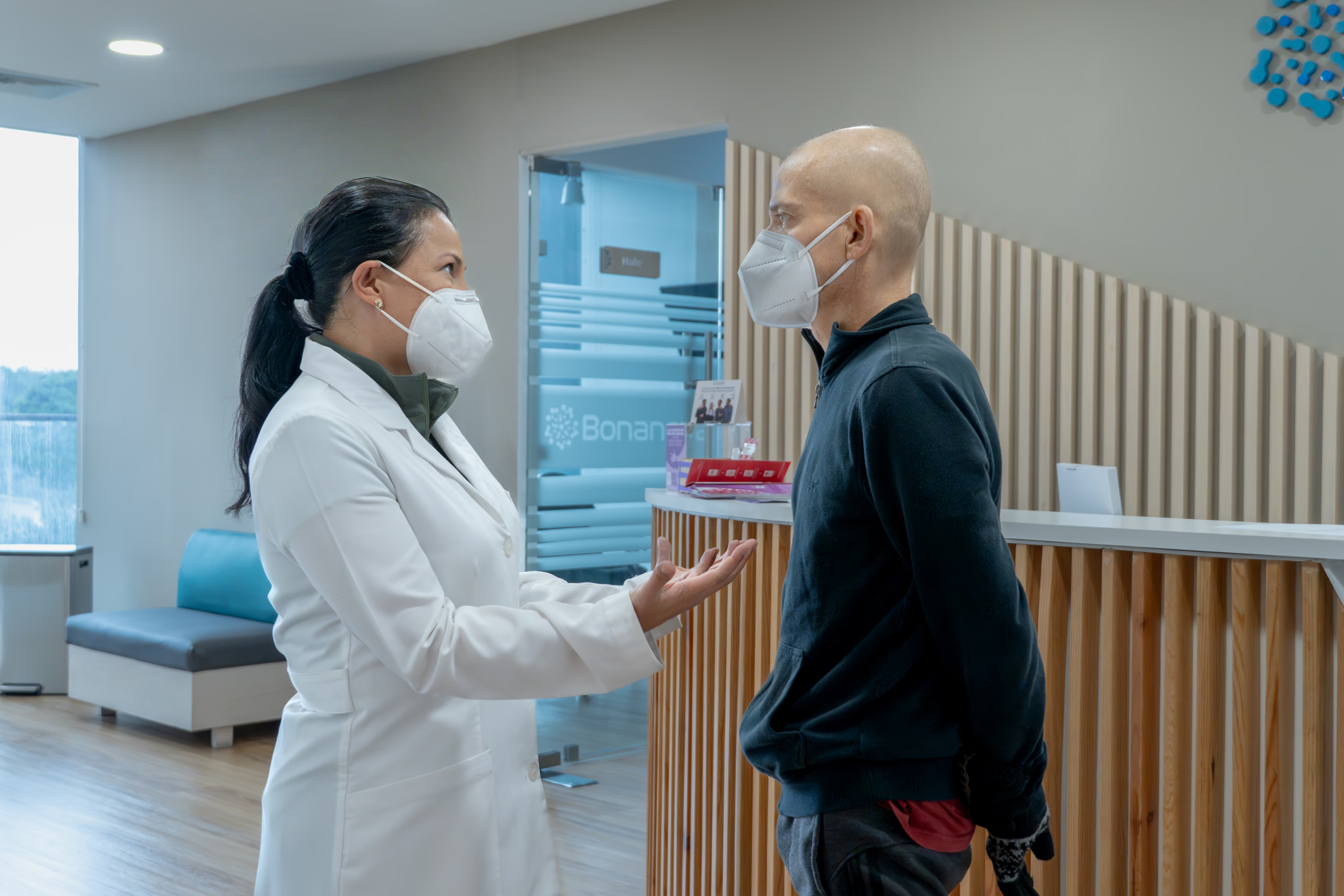
Trained at Vall d'Hebron in Barcelona with a fellowship in cytogenetics and flow cytometry, I approach every leukemia diagnosis with precision: complete genetic classification, honest second opinions, and a treatment protocol designed for your specific subtype.
Leukemia is a cancer of the blood cells that originates in the bone marrow. There are multiple types: acute and chronic, lymphoid and myeloid, and each requires a different treatment protocol. The exact subtype, genetic profile, and prognostic stratification are decisive in individualizing the patient's treatment and improving survival.
That's why an incomplete diagnosis is the most costly mistake in leukemia. A patient treated without genetic classification is far more likely to relapse, and to face a more difficult rescue. The first consultation with Dr. Valvert starts by reviewing exactly what is known and what is missing.
“Leukemia is not treated the same way in every patient. The correct protocol depends on the histological subtype, genetic alterations, and the patient's individual characteristics at the time of diagnosis. That's the first thing we review.”—Dra. Fabiola Valvert
Leukemia often presents with nonspecific symptoms that are mistaken for other conditions. Recognizing them in time makes the difference between an early diagnosis and a late one.
Tiredness disproportionate to exertion, that doesn't improve with rest. Results from anemia caused by displacement of normal cells.
Fever episodes with no evident infection, or frequent infections. A sign of a compromised immune system.
Bleeding gums, bruises without injury, petechiae on the skin. Indicates thrombocytopenia — low platelets.
Enlarged lymph nodes in the neck, armpits, or groin with no active infection to explain them.
Especially in the limbs and sternum. Results from the expansion of leukemic cells in the bone marrow.
Weight loss with no change in diet or physical activity. A classic B symptom in leukemias and lymphomas.
Heavy sweating at night with no environmental cause. Common in chronic leukemias and lymphomas.
Leukocytosis, anemia, or thrombocytopenia found on a routine exam with no clear explanation — always requires a hematologic evaluation.
A one-hour first consultation is enough to begin the workup and, if applicable, reach a clear diagnosis
Some of the most important cases that come to Dr. Valvert's practice are patients who already received treatment — and relapsed, or never responded as expected. Often the problem wasn't the patient or the disease: it was an incomplete diagnosis from the start.
Patients treated without cytogenetics or FISH from the time of diagnosis. Without knowing whether there's a Philadelphia chromosome, t(8;21), inv(16), or other alterations, the protocol can't be the right one. Dr. Valvert completes the classification and redefines treatment.
In Guatemala, a relapse within the first 12 months of treatment makes us suspect the initial treatment wasn't right for the specific leukemia subtype. The full case is re-evaluated, reclassified, and a rescue protocol with curative intent is designed.
Leukemia that did not respond to first-line treatment. Requires a change in strategy — immunotherapy, targeted therapies, or evaluation for allogeneic transplant. Dr. Valvert evaluates all available options.
“A relapse is not the end. In most cases there are options — but they require a more complete diagnosis than the one done the first time.”—Dra. Fabiola Valvert
A complete leukemia diagnosis isn't made with a single blood count. It requires morphology, flow cytometry, cytogenetics, and molecular studies. In the first consultation with Dr. Valvert, we review what you have, what's missing, and what decisions depend on that.
Detailed medical history, review of prior blood counts, biopsies, bone marrow studies, and any treatment received previously.
Microscopic evaluation of circulating cells. The first step in identifying blasts and guiding the diagnosis.
Immunophenotyping to classify the exact type of leukemia — lymphoid or myeloid, and the specific subtype within each category.
Chromosomal study to identify genetic alterations that determine prognosis and treatment — Philadelphia chromosome, t(8;21), inv(16), among others.
PCR and next-generation sequencing when applicable. These detect mutations not visible on conventional cytogenetics that can change treatment.
Lumbar puncture to evaluate central nervous system involvement, relevant in high-risk leukemias and cases with neurological symptoms.
PET-CT, CT scan, or MRI to evaluate extramedullary involvement, enlarged lymph nodes, and disease extent.
Evaluation of treatment response at the molecular level. Determines whether leukemic cells remain undetectable by conventional methods and guides decisions on consolidation or transplant.
With the complete diagnosis, risk is classified and the protocol is designed: chemotherapy, immunotherapy, targeted therapies, or evaluation for bone marrow transplant.

Dra. Fabiola Valvert
Hematologist specialized in Leukemia. International training at Vall d'Hebron, private practice in Guatemala City.
Dr. Valvert specialized at Hospital Universitario Vall d'Hebron, one of the leading oncohematology reference centers in Europe: where the cases other centers cannot solve are treated.
No leukemia treatment protocol is correct without genetic classification. Dr. Valvert does not start treatment without knowing exactly which subtype and genetic profile she is facing.
She has rescued patients with leukemia in second relapse who other centers had offered only palliative treatment. Difficult cases aren't the exception in her practice: they're the center of it.
With publications in Blood Advances and the Journal of Clinical Investigation, Dr. Valvert applies and contributes to the most up-to-date protocols. Her patients in Guatemala receive treatment at the level of the world's best centers.
First visit, second opinion, or transplant consultation — all options available.
Bonanova, a private hospital specializing in cancer care in Zona 15
Monday to Friday from 9:00 AM to 6:00 PM Saturday from 9:00 AM to 12:00 PM
Dr. Valvert handles hematologic emergencies through Bonanova, a private hospital specializing in cancer care with full infrastructure for urgent situations.
The consultation costs Q475 and lasts between 1 and 2 hours. It includes a complete case review, diagnostic evaluation, and a detailed explanation of the treatment plan. Seen at Hospital Bonanova, Zona 15, Guatemala City.
Yes, in many cases. Complete remission rates in acute lymphoblastic leukemia exceed 90% with the correct treatment. In acute myeloid leukemia, it depends on the subtype and genetic profile. A complete diagnosis from the start is what determines whether the treatment will work.
Yes. If you have suggestive symptoms or an abnormal blood count with no explanation, Dr. Valvert can guide the complete diagnostic process from the first consultation.
Still have questions? Let’s talk directly on WhatsApp for personalized answers.